By Marcus Elmer, Vice President, Copper Development Association Copper has been used for...
Overview
- Properly installed copper water service lines typically last 75 to 100 years, depending on site conditions, water chemistry, and installation quality.
- Copper resists corrosion in most common soils, but localized chemical exposure, poor drainage, and stray electrical currents can affect performance.
- Uniform bedding, compatible backfill, and proper joint preparation help support long service life.
- Repair and replacement decisions should consider leak history and operating conditions alongside pipe age.
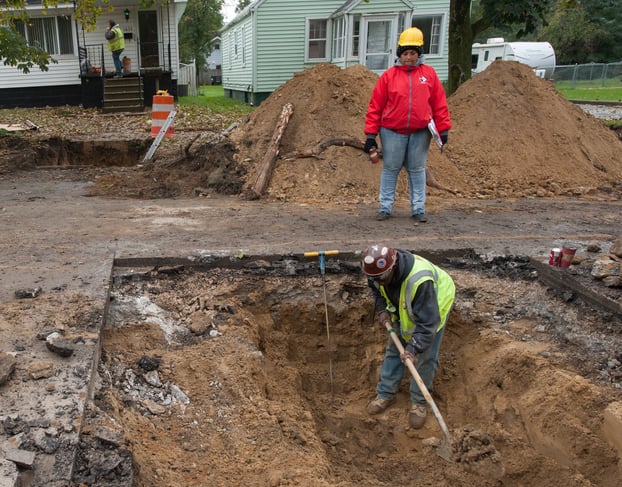
Properly installed copper water service lines typically last 75 to 100 years. However, actual service life depends on the environment around the pipe, the water flowing through it, and how the system was installed.
Copper resists corrosion in most common soils, making it a well-established material for underground water service. But localized conditions can affect that performance. For utilities evaluating aging infrastructure and contractors installing new lines, understanding these conditions helps identify problems before they require repairs.
How Underground Conditions Affect Copper Pipe Durability
Soil Chemistry
Copper develops a protective surface film (patina) that helps it resist corrosion in most underground environments. Certain conditions can disrupt that protection, allowing deterioration.
In their paper “Conditions Contributing to Underground Copper Corrosion,” published in the Journal AWWA, James R. Myers and Arthur Cohen identify several potentially aggressive exposures. These include soils containing elevated concentrations of chlorides, sulfates, ammonia compounds, or sulfides, as well as certain acidic conditions.
The authors emphasize that underground corrosion involves interacting factors. Soil type alone does not determine whether copper will corrode. Common soils generally support reliable performance, while localized contamination can change the environment around a particular section of tube.
Before installation, review the site’s soil conditions and potential chemical exposures. Fertilizers, deicing salts, and other surface treatments deserve attention because runoff can carry these compounds toward buried piping.
Moisture and Drainage
Moisture can support external corrosion when combined with aggressive soil conditions. Myers and Cohen associate corrosion with elevated chloride or sulfate concentrations, poor drainage, and moisture-retentive soils.
Their paper recommends directing water away from buried service lines and keeping trenches from collecting runoff containing deicing salts or lawn fertilizer. These practices help prevent moisture and corrosive compounds from concentrating around the tube.
Drainage should be considered during construction and after the installation is complete. Where possible, prevent rainwater from entering open trenches, and assess whether the finished trench could serve as a drainage path for surrounding areas.
Bedding and Backfill
Backfill affects the environment surrounding copper tubing and the support it receives. Compatible, homogeneous material helps provide more consistent conditions along the line.
Myers and Cohen explain that differences in backfill can create localized variations in oxygen or salt concentrations that contribute to corrosion. Their recommendations include avoiding nonhomogeneous and cinder backfills.
Mechanical support also matters, as rocks and construction debris can create concentrated loads against the tube. Uneven bedding or inadequate compaction can leave sections unsupported and place stress on connections as the ground settles.
Prepare the trench to provide uniform support. Remove debris and account for anticipated settlement when placing and compacting backfill.
Stray Electrical Current
Nearby electrical infrastructure can also affect buried metallic piping. Myers and Cohen identify uncontrolled direct current as a potential source of underground copper corrosion.
Their paper explains that damage can occur when stray current leaves the copper and returns to the soil. Potential sources include direct-current transit systems and cathodic protection systems serving nearby structures.
Sites with potential electrical interference require evaluation. Identifying the source allows the responsible parties to determine appropriate corrective measures.
Water Chemistry Inside the Pipe Also Influences Service Life
The conditions inside the pipe warrant attention alongside those in the surrounding soil.
Most natural waters are compatible with copper, but in some cases, specific water conditions can contribute to localized corrosion or pitting. Relevant characteristics include pH and alkalinity, dissolved constituents and gases, and water temperature and flow velocity.
Changes in source water or treatment practices may alter conditions within existing piping. Municipal water quality records can help engineers evaluate performance or investigate an unexpected failure.
Considering internal and external conditions together provides a more complete assessment. A leak should not automatically be attributed to soil exposure without examining the water chemistry and installation history.
Installation Practices That Support Durability
Long service life depends on preserving the tube’s condition and installing it with appropriate support and connections:
- Protect copper tubing from scratches, dents, and contamination during handling and storage.
- When outdoor storage is necessary, keep material elevated, covered, and ventilated.
- Prepare joints in accordance with applicable standards and procedures. Myers and Cohen describe how improperly prepared or installed flared joints can contribute to localized erosion and corrosion. Careful joint preparation helps prevent installation defects from becoming service problems.
Movement also requires consideration, particularly in buried hot-water systems. Where copper tubing passes through concrete, the design must accommodate thermal expansion and contraction. The paper identifies restricted movement at slab penetrations as a potential contributor to corrosion fatigue.
Installation records should document the work performed and any unusual site conditions. Those records become useful when owners assess the line years later.
Read our blog for a more in-depth look at Best Practices for Installing and Prepping Underground Copper Service Lines.
Investigating Failures and Planning Repairs
A leak establishes where a line failed. Determining why requires a broader investigation.
Review the tube and joint condition alongside installation records, soil information, and water quality history. Consider whether drainage patterns, landscaping practices, or nearby infrastructure have changed since installation.
Leak detection data and previous service records can help establish whether the problem is isolated or recurring. That distinction matters when deciding whether to repair a section or replace the line.
Myers and Cohen describe several approaches to mitigating underground corrosion, including improved drainage, suitable backfill, and correction of stray-current interference. The appropriate response depends on the cause. Replacing damaged pipe without addressing the surrounding conditions may leave the underlying problem unresolved.