Overview Partial replacements can increase lead levels and leave ongoing compliance risks. The LCRI...
The Total Lifecycle Cost and Recyclability Value of Copper Service Lines
By Marcus Elmer, Vice President, Copper Development Association
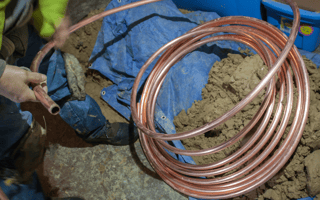
Copper has been used for underground water service lines since the early 20th century. Its performance history, established standards, and recyclability make it a durable and financially defensible choice for large-scale lead service line replacement programs.
Summary: Copper service lines support long-term infrastructure value through exceptional durability, established performance standards, and the ability to recover material value at the end of service. They typically last 75 to 100 years, contain on average more than 50 percent recycled content, retaining a significant portion of their intrinsic material value as scrap at the end of service—often recovering 80 to 90 percent of the metal’s commodity value depending on market conditions. Because copper has a high recovery and capture rate, removed service lines re-enter domestic manufacturing streams rather than becoming waste. This allows municipalities and water utilities to incorporate salvage value, reduced replacement frequency, and circular economy benefits into lifecycle cost planning.
How Does Copper Recyclability Work in Lead Service Line Replacement?
Recyclability in underground water infrastructure has direct financial and operational implications.
Copper is fully recyclable without loss of performance. When a copper service line is removed, it is processed and returned to the scrap supply chain for reuse. This practice is supported by a mature copper recycling infrastructure across the United States.
Because copper retains economic value, it is intentionally recovered during replacement. This high capture rate means removed material contributes to project value rather than disposal cost.
For utilities implementing lead service line replacement programs, recyclability means:
- Scrap recovery can offset a portion of the replacement expense
- Removed material retains market value and re-enters the copper supply chain through established recycling channels.
- Projects align with sustainability and circular economy objectives
- Lifecycle models can incorporate measurable salvage value
What Is Included in the Total Lifecycle Cost of a Copper Service Line?
Total lifecycle cost includes material purchase price, installation and labor, performance over decades, maintenance considerations, and end-of-life recovery value.
Lead service line replacement is excavation-intensive. The EPA estimates a full replacement of lead service lines will cost an average of $4,700, ranging from $1,200 to $12,300 per replaced service line. The majority of that cost is excavation, restoration, equipment, and labor.
Copper service lines have demonstrated service lives of 75 to 100 years. Plastics are typically expected to last about 25 years. Over a 75-year planning period:
- Copper is installed once
- Plastic may require two additional full replacements
Each replacement repeats excavation, restoration, and service disruption, which represent the largest share of project cost in most service line replacements.
Using accepted engineering economic methods such as ASTM E917, lifecycle modeling shows copper provides approximately $3,300 in savings per service line in constant dollars and significant savings in total dollars spent over the service life.
Durability and recyclability work together to influence total cost of ownership.
For a detailed lifecycle cost comparison and engineering economics analysis, download CDA’s fact sheet, Service Line Material Choice: The False Initial Cost Economy, which outlines the assumptions, modeling methodology, and long-term cost impacts.
How Does Scrap Value Influence Lifecycle Cost?
Copper service lines retain scrap value, often recovering 80 to 90 percent of new copper value by weight. That retained value is incorporated into present-value lifecycle models.
Copper is fully recyclable without loss of performance, allowing recovered material to re-enter the copper production cycle and support long-term resource efficiency.
When copper service lines are removed, they become feedstock for new manufacturing. Scrap recovery reduces demand for new material and strengthens domestic supply chains.
For lead service line replacement programs involving thousands of service lines, recovered material represents measurable financial and environmental value.
A Resilient and Established Supply Chain
Lead service line replacement programs are scaling nationally. Material availability is an important consideration.
Copper benefits from a mature domestic manufacturing and recycling ecosystem. Recovered copper re-enters production streams, supporting ongoing infrastructure demand.
Federal funding programs that prioritize American-made materials further strengthen supply reliability and local economic impact.
For a deeper look at domestic copper availability and federal funding incentives, read CDA’s blog: Yes, There’s Enough Copper to Replace Lead Pipes Plus Federal Funding for Using American-Made Products.
Incorporating Lifecycle Cost into Procurement
Lifecycle cost evaluation requires a long-term perspective. Procurement decisions should consider:
- Initial installation cost
- Expected service life
- Replacement frequency
- Salvage value
- Recycled content
- Supply stability
Lifecycle thinking is about considering the long-term investment and recognizing that copper retains value even when service eventually ends.
When viewed over decades, copper’s durability, recyclability, and retained material value contribute to predictable, defensible infrastructure decisions.
Proven Standards and Long-Term Performance
Copper services lines offer proven benefits:
- Recyclability supports lifecycle value.
- Durability ensures that value is realized over decades.
- Copper service lines are manufactured to ASTM B88, a long-standing consensus standard supporting water utilities. This consistency provides confidence in performance expectations.
- Copper is impermeable. External contaminants in surrounding soil conditions cannot migrate through the pipe wall. This supports potable water protection over long service periods.
- Field performance also matters. Copper does not require special UV inhibitors during storage prior to installation. It maintains performance integrity during handling and staging.
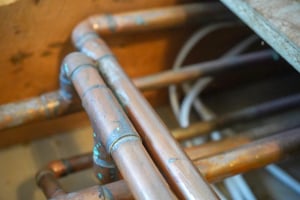
- Copper offers multiple joining methods accepted in codes and standards. These established methods support installation flexibility and contractor familiarity:
- Flaring, pressing and compression fittings provide flameless options.
- Brazing is permitted underground where codes allow.
Infrastructure That Retains Value
Lead service line replacement is a generational commitment to public health. Excavation, restoration, and community disruption represent significant cost. Selecting a material that combines long service life with measurable recovery value strengthens both fiscal responsibility and sustainability performance.
Copper service lines retain value at end of service, re-enter manufacturing, and continue contributing to water infrastructure for decades to come. When lifecycle cost and recyclability are evaluated together, copper delivers enduring infrastructure value.
Frequently Asked Questions
How long do copper service lines last?
Copper service lines typically last 75 to 100 years when installed properly and in accordance with standards.
Is copper tube recyclable after removal?
Yes. Copper is intentionally recovered and recycled, retaining measurable scrap value.
Does copper tube contain recycled content?
Yes. Copper tube produced in the United States contains on average more than 50 percent recycled content, reflecting the high recovery and reuse of copper within the broader production cycle.
Why does impermeability matter for water service lines?
Copper’s impermeability helps protect drinking water from external contaminants in surrounding soil conditions.
Lifecycle Snapshot for Lead Service Line Replacement Planning
|
Factor |
Copper Service Lines |
|
Service life |
75 to 100 years |
|
Replacements over 75 years |
One installation |
|
Scrap recovery value |
80 to 90 percent of new copper value |
|
Recycled content |
Over 50 percent |
|
Capture rate |
High due to recognized scrap value |
|
Standards compliance |
ASTM B88 |
Marcus Elmer
Vice President of the Copper Development Association
Marcus Elmer, Vice President of the Copper Development Association, is a seasoned professional with over 15 years of experience in the plumbing and mechanical industries. He leverages his expertise to identify and influence market trends for copper tube and fittings products, driving strategic programs encompassing technical research, codes and standards, advocacy, and education. With a unique perspective gained from his time as a project manager with commercial plumbing, mechanical, and refrigeration contractors, Elmer has a deep understanding of the industry.