By John Hipchen, Director of Energy and Electrical Systems Council for the Copper Development...
By John Hipchen, Director, Energy and Electrical Systems, and Erin Smith, Deputy Director, EHS and Recycling
The copper already installed in buildings, substations, and electrical equipment is a long-term domestic resource. Recovering more of it will require improved collection, greater processing capacity, and systems designed for end-of-life recovery.
Summary: Copper already embedded in the U.S. electrical infrastructure is a valuable urban mine that can strengthen future domestic supply. Capturing more of it depends on recovering end-of-life equipment, expanding secondary processing capacity, and designing grid components for easier disassembly. Recycling can ease supply pressure, but copper's long service life means it cannot replace near-term investment in primary production.
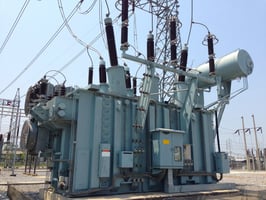
Copper already installed in buildings, substations, transformers, motors, cables, and other infrastructure adds up to a substantial domestic inventory that doesn’t need to be newly mined. Engineers call this stock the "urban mine." As that equipment reaches the end of its service life, the copper inside it becomes a growing source of secondary supply.
That opportunity matters more with each passing year. As the United States modernizes the power grid, expands data center capacity, and connects more electric loads, copper demand is rising across generation, transmission, distribution, and end-use equipment. The U.S. Geological Survey reports that electrical applications account for about three-quarters of total copper use and that manufacturing byproducts and obsolete copper products are readily recycled.[1]
What happens to copper once it’s recycled
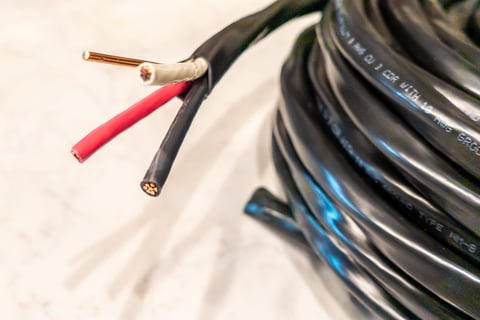
Electrical wire is especially attractive because its core is typically high-purity copper. When insulated wire is recovered, the old wire can be stripped of its insulation, and the high-grade copper can be melted and made into new copper products. Coordination among manufacturers, asset owners, demolition contractors, and recyclers can make recovery more economical.[3]
The simplest stream is "new scrap," such as offcuts and runaround material generated during manufacturing. Producers often know its origin and composition, so it can then be returned directly to a controlled production process.
"Old scrap" from demolished buildings or retired equipment is more variable and may require additional sorting, separation, smelting, or refining. In 2023, USGS estimated that the United States recovered about 700,000 metric tons of copper from new scrap, compared with 150,000 metric tons from old scrap. Together, recycled materials accounted for 33% of the U.S. copper supply. [2]
Turning that inventory into usable metal at scale is another matter. Getting more of it back into the supply chain faces two obstacles: the economics of collecting and processing scrap, and copper’s durability.
The bottleneck is economic and structural
Copper's recyclability does not make recovery automatic. End-of-life material must first be removed from service, collected, identified, and sorted. Insulation, steel, and other materials must be separated, and lower-grade or mixed feedstock may require more intensive refining before it can be used in high-performance electrical applications. Each step adds cost.
Domestic processing capacity also shapes scrap flows. As U.S. secondary smelting continues to add capacity after years of decline, refining options can make overseas buyers more competitive. Logistics matter as well: moving large volumes through ports can sometimes be less expensive than hauling material overland to a domestic processor. [4]
Globally, recycled supply has not kept pace with consumption. The International Energy Agency reported that secondary copper, including direct-use scrap, declined from 37% of total demand in 2015 to 33% in 2023. This trend does not indicate a lack of recyclable copper. It shows that collection, processing capacity, and demand growth must be addressed together.[3 ]
Copper's long life creates a timing challenge
The same durability that makes copper a strong choice for grid infrastructure also delays its return to the recycling stream. Building wire can remain in service for 40 years or longer. New substations, data centers, and electrical systems expand the future urban mine, but most of that copper will not be available until those assets are replaced or decommissioned.
The IEA expects global copper scrap volumes to rise from about 16 million metric tons today to 27 million by 2050, with construction remaining the largest source of end-of-life material. Even so, theoretical availability does not equate to practical recovery. Some buried cable is uneconomic to excavate, and copper in complex products can be lost to other material streams during shredding.[3]
Designing today's equipment for tomorrow's recovery
Some of that gap can be closed before equipment ever reaches the end of life, simply by designing for recovery from the start:
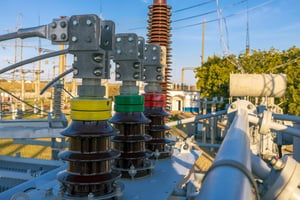
● Switchgear often contains large, uninsulated copper busbars that can serve as valuable feedstock if accessible at the end of life.
● Transformers and motors can likewise be designed so that coils and windings are easier to remove, identify, and separate.
● Modular connections, documented material composition, and disassembly planning across numerous product lines can all reduce future recovery costs.
Aligning the incentives
The incentive challenge is clear: manufacturers bear the cost of design changes today, while recyclers may capture the value decades later. Procurement standards, take-back programs, material traceability, and closer partnerships among equipment makers, asset owners, demolition contractors, scrap processors, and secondary smelters can align those interests. The IEA identifies stronger collection, improved sorting, and investment in secondary smelters as key actions to increase copper recycling.[3]
Turning the urban mine into grid resilience
A stronger domestic copper cycle requires three interconnected capabilities:
● Recovering more end-of-life material
● Processing a broader range of scrap domestically
● Designing electrical systems for economical disassembly.
Better data on where copper is installed and when assets will retire can also help processors plan capacity and help owners treat decommissioned equipment as a strategic resource.
The potential is substantial. In the IEA's Announced Pledges Scenario[ES10] [JH11], secondary copper supply, excluding direct-use scrap, rises from 17% of demand today to nearly 40% by 2050. Realizing that potential will require sustained investment and coordination, but the result would be a more resilient copper supply chain and a stronger foundation for the grid. Building with copper today should also include planning for its next useful life.[3]
Sources
1. U.S. Geological Survey, Copper Statistics and Information.
2. U.S. Geological Survey, Mineral Commodity Summaries 2024: Copper, January 2024.
3. International Energy Agency, Recycling of Critical Minerals, 2024.
4. United Nations Conference on Trade and Development (UNCTAD). (2023). Review of Maritime Transport. United Nations Publications.